
Are you a skilled tradesperson planning to live and work in Australia? Whether you’re an electrician, plumber, chef, carpenter, or another trade specialist, obtaining a TRA skills assessment is a crucial step in securing your Australian dream.
In this comprehensive guide, we’ll explain what TRA (Trade Recognition Australia) is, how its assessment process works in 2026, major pathways available for different applicants, required documents, fees, timelines, and expert tips to make your application successful.
At the end of this guide, you’ll also find insider information on how CDRSkillAssessment.com can help you prepare error-free documentation and increase your chances of a positive TRA outcome.
Key Highlights
- Understanding TRA and the significance of its skill assessment for trade migration.
- Detailed overview of TRA pathways: MSA, OSAP, JRP, and TSS skills assessments.
- Expert support & benefits from CDRSkillAssessment.com to boost your application success.
What Is TRA?
TRA stands for Trade Recognition Australia, a government agency responsible for assessing the skills of individuals who have acquired trade skills overseas or within Australia and wish to receive recognition for migration or employment purposes.
TRA is the official assessing authority for over 130 trade occupations listed on Australia’s Skilled Occupation List. Its assessments ensure your skills, training, and experience meet the standards expected in the Australian labour market.
In short, TRA determines whether your trade qualifications and experience meet Australian standards, a vital requirement for visas such as Subclass 189 (Skilled Independent), Subclass 190 (State Nominated), and Subclass 491 (Regional Skilled), among others.
Why is the TRA Skills Assessment Important?
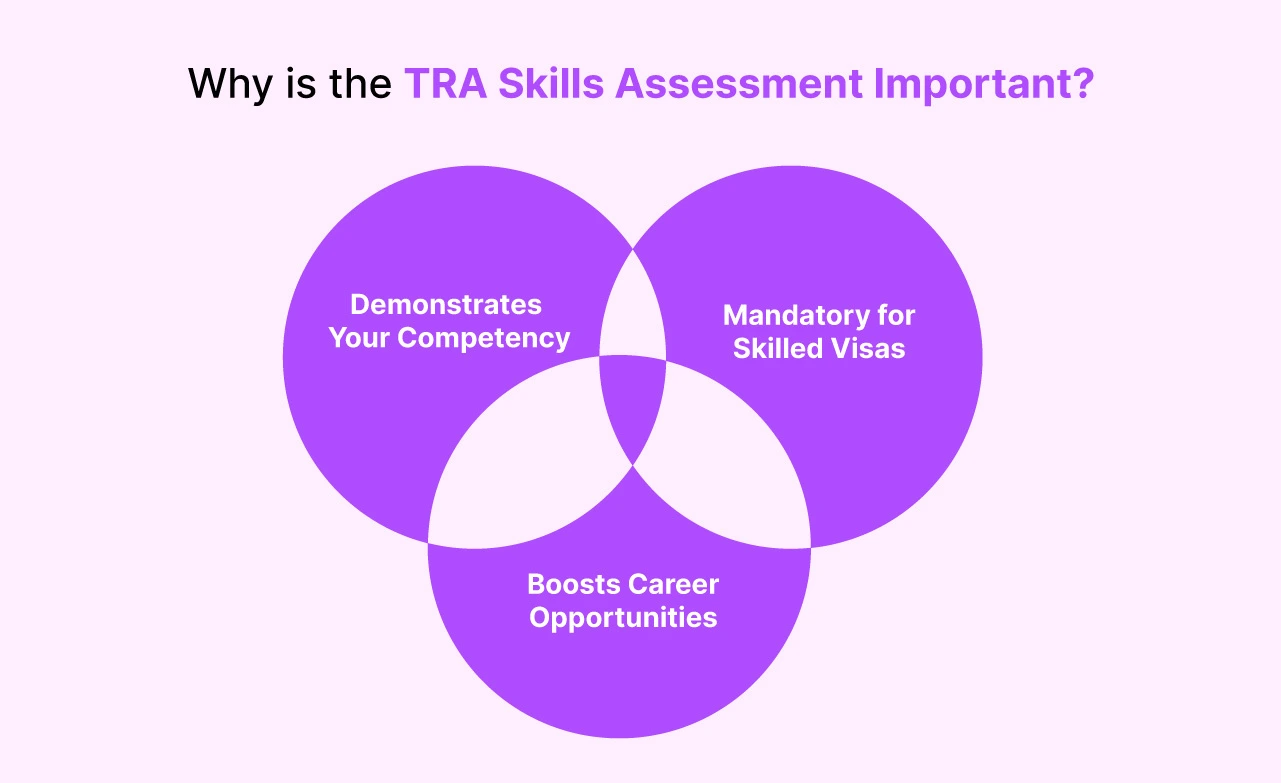
1. Demonstrates Your Competency
A positive TRA skill assessment proves that your trade skills are relevant and meet Australian workplace standards. This validation is often essential to employers and licensing authorities.
2. Mandatory for Skilled Visas
For many skilled migration paths to Australia, a successful TRA assessment is mandatory. Without this approval, you may not be able to lodge your visa application with the Department of Home Affairs.
3. Boosts Career Opportunities
Holding official recognition from TRA gives you a competitive edge in the job market, improving your employability and helping you command better positions and pay.
TRA Assessable Trade Occupations
TRA assesses a wide variety of trade occupations. Some examples include:
| ANZSCO Code | Occupation |
| 341111 | Electrician (General) |
| 334111 | Plumber (General) |
| 331212 | Carpenter |
| 351311 | Chef |
| 394111 | Cabinetmaker |
This is just a snapshot. TRA assesses dozens of occupations across construction, automotive, engineering, hospitality, and more. Each occupation has its own set of requirements you must meet.
TRA Assessment Pathways in 2026
TRA offers several pathways depending on your location, qualifications, and visa requirements. Understanding which one applies to you is key to a successful application.
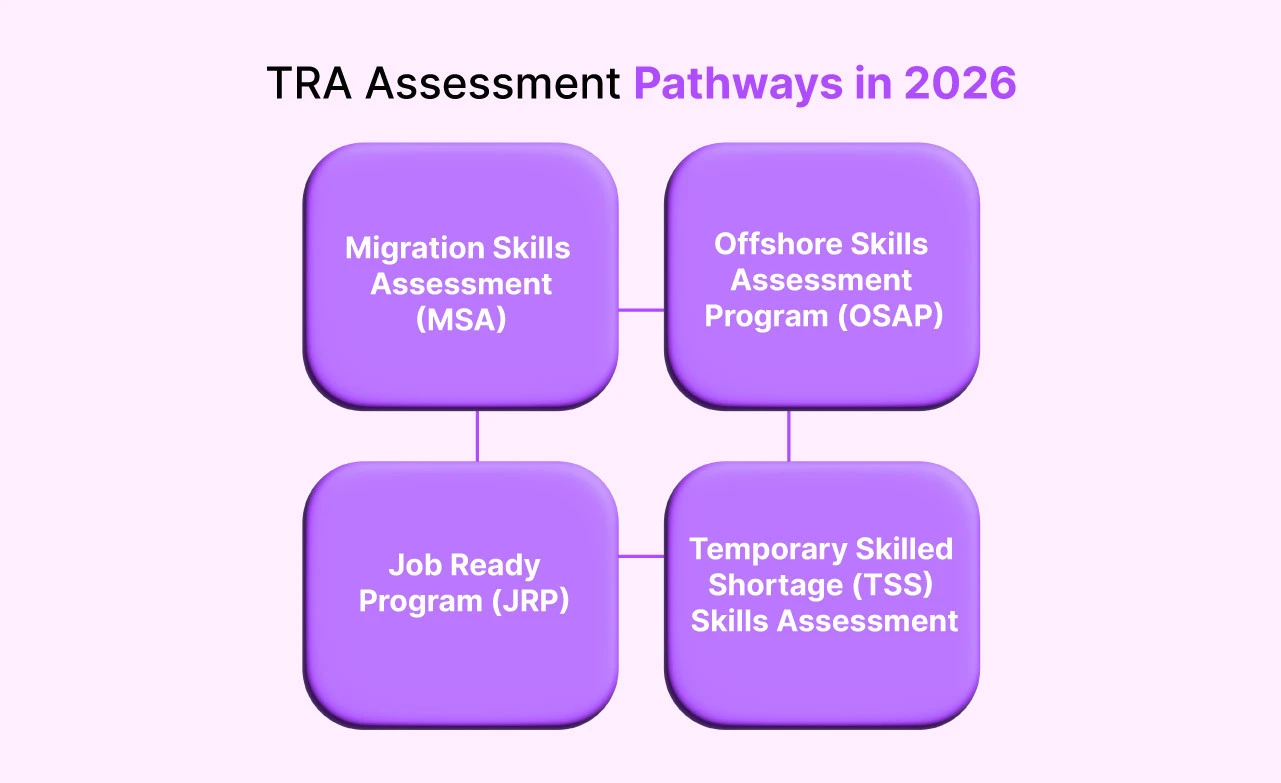
1. Migration Skills Assessment (MSA)
- Best for: Applicants overseas seeking independent skilled migration to Australia.
- Purpose: Confirms whether your skills and experience meet Australian standards for your nominated occupation.
- What’s Assessed: Your qualifications and documented employment history.
- Use: You can use the positive outcome for migration visas.
2. Offshore Skills Assessment Program (OSAP)
- Best for: Workers who are currently outside Australia.
- How it Works: You submit evidence of your qualifications and experience to a TRA-approved Registered Training Organisation (RTO). You may need a technical interview or practical assessment, depending on your profile.
3. Job Ready Program (JRP)
- Best for: International graduates who studied and lived in Australia.
- How it Works: This employment-based assessment includes stages like Provisional Skills Assessment, workplace training, and final assessment. Completion of this program provides a valid skills outcome for migration purposes.
4. Temporary Skilled Shortage (TSS) Skills Assessment
TRA also supports applicants who need assessments for temporary work visas, such as the Subclass 482 visa. Your eligibility and pathway will depend on your work experience and qualification relevance.
Required Documents for TRA Skills Assessment
Before applying, prepare the following:
1. Educational Qualifications
Includes trade certifications, diplomas, or other formal training documents.
2. Proof of Employment
Verified references, employment contracts, payslips, and tax documents.
3. Identity Documents
Passport and national identity cards.
4. Skills Reports
Detailed job descriptions outlining tasks and responsibilities relevant to your trade.
5. Translations
If any documents are not in English, include NAATI-certified translations.
TRA Skills Assessment Fees (Approx in AUD)
Fees vary depending on the pathway.
| Program | Estimated Fee (AUD) |
| Migration Skills Assessment | Fees vary (refer TRA website) |
| OSAP Documentary Evidence | ~$1,120 – $1,280* |
| OSAP Technical Interview | ~$900 – $2,000* |
| Job Ready Program | Paid per stage (varies) |
Step-by-Step Application Process
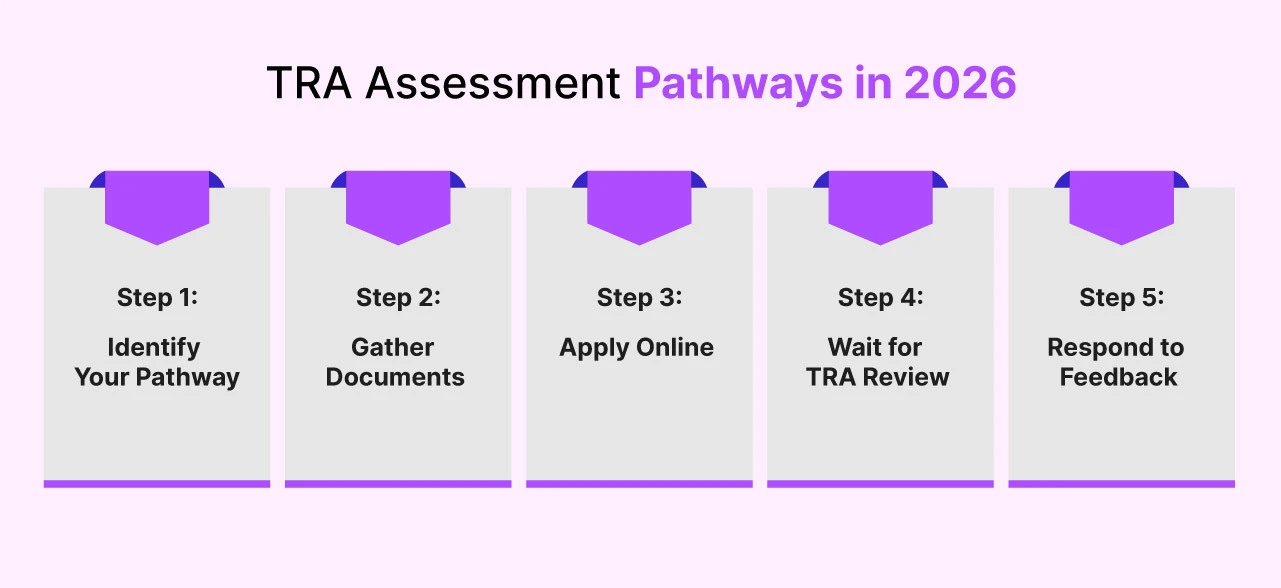
Step 1: Identify Your Pathway
Choose which TRA program fits your background and visa plans.
Step 2: Gather Documents
Ensure all evidence is correct, translated, and formatted as per TRA requirements.
Step 3: Apply Online
Submit your application through the TRA Online Portal.
Step 4: Wait for TRA Review
TRA typically takes several weeks to months, depending on the pathway and volume of applications.
Step 5: Respond to Feedback
If TRA requests additional documentation, provide it promptly to avoid delays.
Tips for a Successful TRA Skills Assessment
- Submit Accurate Information: Ensure every document and detail is accurate and verifiable.
- Include Clear Job Descriptions: Your skills and tasks should align with Australian occupational standards.
- Avoid Missing Documents: Incomplete applications lead to delays or refusals.
- Plan for Time: TRA assessments can take time; plan your visa timeline accordingly.
How CDRSkillAssessment.com Can Help You
Navigating TRA assessments can be complex. That’s where we at CDRSkillAssessment.com step in:
Professional Documentation Assistance
We help you prepare error-free supporting documents that meet TRA standards and reduce the risk of delays.
Expert Guidance
Our migration experts guide you through the right TRA pathway, whether it’s MSA, OSAP, JRP, or TSS skills assessment.
End-to-End Support
From initial eligibility checks to submission and follow-up, we ensure your application is complete and competitive.
Conclusion
A TRA skills assessment is a crucial milestone for trade professionals aiming to migrate to or work in Australia. By understanding what TRA is, choosing the right pathway, and preparing your application carefully, you can significantly improve your chances of securing a positive outcome, and with expert support from CDRSkillAssessment, you can navigate the process confidently and efficiently.
Frequently Asked Questions (FAQs)
1. What is TRA (Trade Recognition Australia)?
Trade Recognition Australia (TRA) is an Australian Government authority responsible for assessing the skills of trade professionals for migration and employment purposes. TRA ensures that overseas or Australian-trained workers meet Australian industry standards before they can apply for skilled visas or gain formal trade recognition.
2. Why do I need a TRA skills assessment for Australia?
A TRA skills assessment is mandatory for most skilled migration visas involving trade occupations. It confirms that your qualifications and work experience align with Australian standards, which is essential for visa eligibility, employer trust, and licensing requirements.
3. Which visas require a TRA skill assessment?
A positive TRA assessment is commonly required for visas such as:
- Subclass 189 – Skilled Independent
- Subclass 190 – Skilled Nominated
- Subclass 491 – Skilled Work Regional
- Subclass 482 – Temporary Skill Shortage (in some cases)
The exact requirement depends on your nominated occupation and visa subclass.
4. How much work experience is required for the TRA assessment?
Generally, TRA requires at least two years of full-time, paid work experience in your nominated trade. Some pathways may require more experience, especially if you lack formal qualifications.
5. Can I apply for a TRA assessment without formal qualifications?
Yes, in some cases. TRA may still assess your skills based on extensive, verifiable work experience, particularly through pathways like OSAP or certain MSA cases. However, strong employment evidence is critical.
6. How long does the TRA skills assessment process take?
Processing times vary depending on the pathway and application completeness. On average:
- MSA / OSAP: 8–12 weeks
- Job Ready Program: Several months (stage-based)
Delays often occur due to missing or incorrect documents.
7. How much does a TRA skills assessment cost in 2026?
TRA fees depend on the assessment pathway:
- Migration Skills Assessment (MSA): Varies by occupation
- OSAP Documentary Evidence: Around AUD 1,100–1,300
- Technical Interview / Practical Assessment: Additional fees apply
- Job Ready Program: Paid per stage
Always confirm the latest fees on the official TRA website before applying.
8. What documents are required for the TRA skills assessment?
Commonly required documents include:
- Trade qualifications or certificates
- Employer reference letters
- Payslips, tax records, and contracts
- Passport and ID documents
- Detailed job descriptions
- NAATI-certified translations (if applicable)
Missing or inconsistent documents are a major cause of refusals.
9. What happens if my TRA assessment is refused?
If your application is unsuccessful, TRA usually provides reasons. You may:
- Reapply with stronger evidence
- Correct documentation errors
- Seek professional assistance to improve your case
Getting expert guidance significantly improves your chances in reapplications.
10. Can CDRSkillAssessment.com help with TRA assessment?
Yes. CDRSkillAssessment.com provides:
- TRA eligibility assessment
- Document preparation and verification
- Employer reference drafting
- TRA application submission support
- Guidance for OSAP, MSA, JRP, and TSS pathways
Our experts ensure your application meets TRA’s strict requirements, reducing delays and refusals.
11. Is professional help worth it for the TRA skills assessment?
Absolutely. TRA applications involve strict documentation rules, occupation-specific criteria, and verification checks. Professional support helps you:
- Avoid costly mistakes
- Prepare compliant documents
- Improve approval chances
- Save time and stress
12. How do I get started with TRA assessment support?
You can start by contacting CDRSkillAssessment.com for a free initial consultation. Our team will assess your profile, recommend the correct TRA pathway, and guide you through the entire process.